Blog
Signs you need rewiring — and what to do next
Older houses were built long before smartphones, induction hobs and EV chargers. If your home is Victorian terrace or has had multiple piecemeal extensions, the electrical installation might be struggling. Here are the clear, practical warning signs that you need rewiring and what to do next.
Common signs you need rewiring
Flickering or dimming lights when other appliances switch on. This is more than annoying — it can indicate undersized or degraded circuits.
Frequent tripping or a consumer unit that keeps blowing fuses. Repeated trips often point to overloaded or damaged wiring rather than faulty appliances.
Discoloured, cracked or warm sockets and switches. Any browning, scorching or a warm faceplate are red flags — stop using that outlet.
Burning smell or buzzing sounds from sockets or the consumer unit. Both are potentially dangerous and require immediate attention.
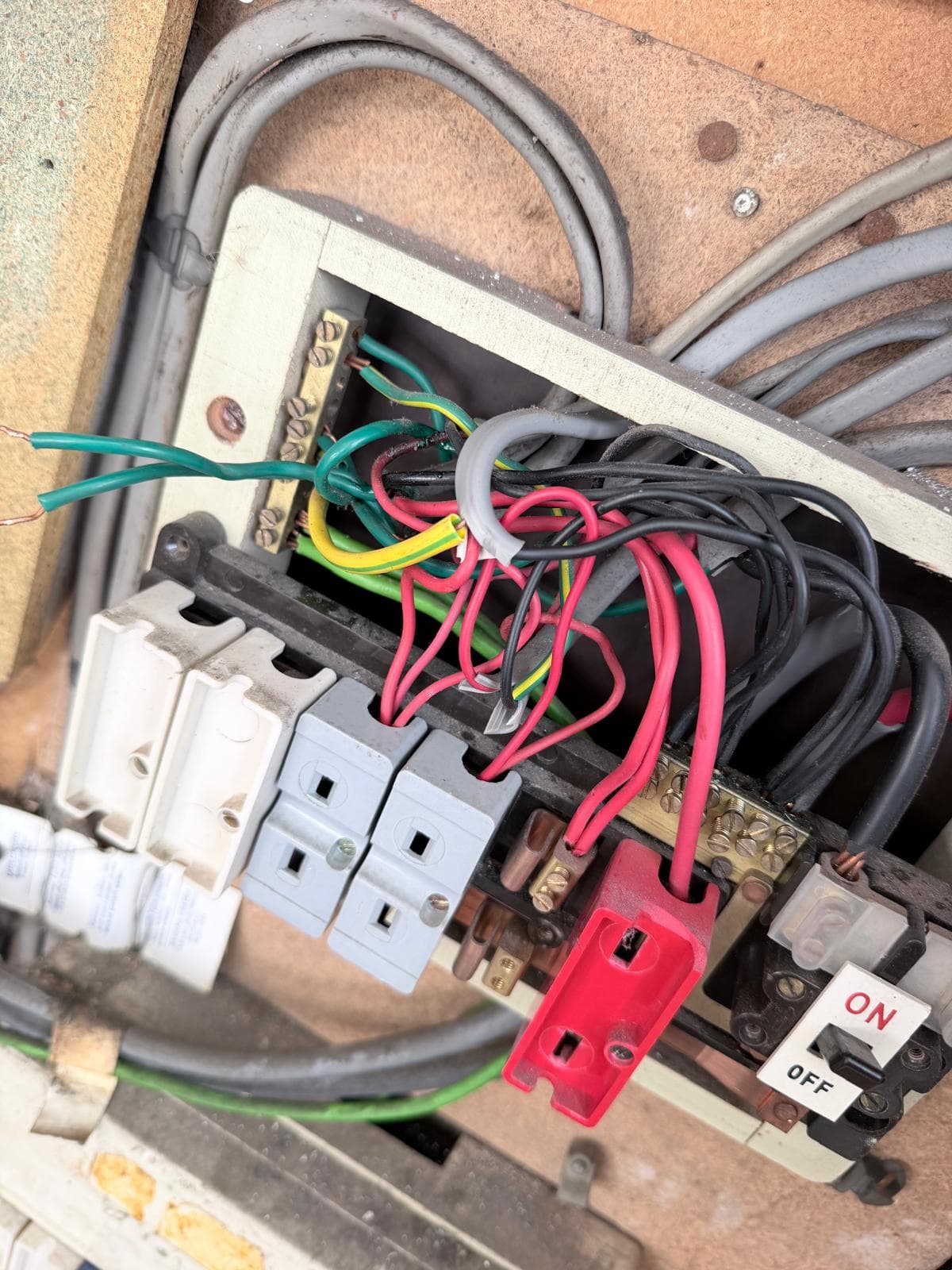
Two-pin plugs, un-earthed sockets or old rewirable fuse boxes. These older fittings are less safe and may not meet current Building Regulations.
Visible cloth/rubber-insulated cables, frayed insulation or amateur splices. These are common in pre-1970s wiring and are not acceptable long-term.
Regular electrical shocks from appliances or when touching switches. Even a mild tingle is serious — this suggests faulty earthing or insulation failure.
Outlets that are loose, sparking or pop when used. Mechanical failure and poor connections generate heat and risk fire.
Multiple extensions and trailing leads in use daily. If you rely on adaptors and extension reels, your circuits probably need more usable sockets.
If you notice any of the above in your South Bristol property, treat the situation as urgent rather than cosmetic.
Immediate safety steps
Turn off the circuit at the consumer unit for the affected area. If you can’t isolate the fault, switch off the main fuse and keep it off until checked.
Don’t use a socket that’s warm, sparking or smells of burning.
Unplug appliances before switching circuits back on.
Avoid DIY electrical repairs. Live work and testing require BS7671 competence.
Take clear photos of damaged sockets, the consumer unit label and any visible wiring — these help get a faster, accurate quote.
What an EICR will tell you (and why you should get one)
An Electrical Installation Condition Report (EICR) is the most useful next step when you suspect wiring problems. The report:
Identifies dangerous or potentially dangerous defects and gives them a priority code.
Confirms whether the installation meets current safety standards and Building Regulations.
Shows whether RCD protection exists and is working — essential for modern kitchens, bathrooms and outdoors.
At GLR Electrical we provide transparent EICR reporting so you can understand exactly what’s wrong and what must be fixed. The report is the checklist your insurer, buyer or landlord will want to see.
Planning the rewiring work
Not all rewiring is the same. Work ranges from partial circuit replacement (kitchens, extensions) to full house rewires in older terraces. Practical steps:
Get an EICR first — it prioritises safety and prevents unnecessary work.
Ask for a staged plan: circuits replaced in high-risk areas first (kitchen, bathroom, consumer unit).
Confirm the scope in writing: number of sockets, lighting, cooker and shower circuits, and any new requirements such as an EV charger or electric heating.
Check for Building Regulations compliance and notification requirements for major electrical work.
Request manufacturer-backed components and a workmanship warranty — GLR Electrical offers a 6-month workmanship period alongside component warranties.
After the work: certification and follow-up
A proper rewire ends with certification and a clear handover. Make sure you receive:
Completion certificates or a minor works/notifiable works certificate if Building Regulations apply.
A copy of the final EICR or test readings showing all circuits pass.
Clear labelling of the consumer unit and a simple user guide for your new installation.
GLR Electrical works to BS7671 and Building Regulations and is fully insured (public liability and employers’ liability).
Common questions homeowners ask
How invasive is a full rewire? Expect access to walls, loft and floors, but modern techniques reduce disruption and we leave work tidy.
Can I rewire one room at a time? Yes — many homeowners phase upgrades to spread the work.
Do I need a new consumer unit with a rewire? Usually recommended — modern consumer units with RCDs and MCBs improve safety.
If you’re in South Bristol and spotting these signs in your home, don’t leave it to chance. Arrange an EICR or a quoting visit so you have a safe, compliant plan.
For straightforward, local advice and transparent reporting, contact GLR Electrical — three years’ local experience, BS7671-qualified engineers, Building Regs compliance and a clear, friendly approach to rewires and electrical upgrades in BS3.
Other Articles