Blog
Do I Need a New Consumer Unit to Add Sockets?
Adding sockets starts with the existing installation
A new socket is not an isolated item. It becomes part of the circuit behind the walls, the protective devices in the consumer unit and the way electricity is used throughout your home. That is why the same request can be straightforward in one property and require more investigation in another.
Here at GLR Electrical, we look at the installation as a whole before recommending any upgrade. Our Plug Socket Installation service covers the practical work, but the important decision is understanding whether the existing circuit can safely support the change.
The age of the property changes the starting point
In an older Bristol property, the wiring may have been installed for a very different pattern of use. A Victorian terrace in Southville or Bedminster may have fewer original sockets, later additions and several generations of alterations hidden behind the walls. A newer home may have a more organised installation, but that does not remove the need to check the circuit supplying the proposed socket.
Age alone does not prove that a consumer unit needs replacing. Equally, a consumer unit that looks tidy does not prove that the installation is suitable. What matters is the condition of the wiring, the type of protective devices fitted and whether the existing arrangement provides the protection expected for the work being requested.
The consumer unit is only one part of the decision
A consumer unit contains protective devices that disconnect a circuit when there is a fault or excessive current. Depending on the design, it may also provide extra protection against electric shock, often called residual current protection.
When we assess a new socket, we consider whether the circuit has suitable safety protection, whether the device protecting it is suitable for the cable and whether the installation shows signs of damage, overheating or previous alterations. If the consumer unit is outdated or does not provide suitable protection, adding another outlet may expose a wider issue rather than solve the immediate convenience problem.
This is also why replacing the consumer unit is not automatically the correct answer. If the existing board and circuit are suitable, a socket can often be added without disturbing the whole electrical setup. If the board is unsuitable, upgrading it may be part of bringing the installation into a safer and more coherent condition.
Layout and cable routes can matter more than the socket itself
The proposed position affects what is involved. A socket on the other side of a plasterboard or stud wall is a different job from one on a solid brick or block wall. Floor construction, built in cupboards, plaster finishes and access to the cable route can all affect how the circuit is extended and how neatly the work can be completed.
In a home with previous extensions or room alterations, the visible sockets may not reveal how the circuit is arranged. A former wall may have been removed, a spur (a branch from an existing circuit) may have been added or a room may have been converted without the original circuit layout being obvious. We need to establish what is actually connected before deciding whether the existing supply can be extended.
The same principle applies in garages, gyms, kitchens and extensions. These spaces often have higher or more specialised electrical demands, so the right solution may involve a separate circuit or extra safety protection rather than simply adding an outlet to the nearest socket circuit.
How the way you use the room affects the answer
Think about what will be plugged in and whether those appliances will run at the same time. A socket intended for a lamp and a phone charger presents a different demand from one serving multiple high power appliances. Kitchen worktops, utility areas and converted rooms deserve particular care because convenience often leads to several appliances being used from nearby outlets.
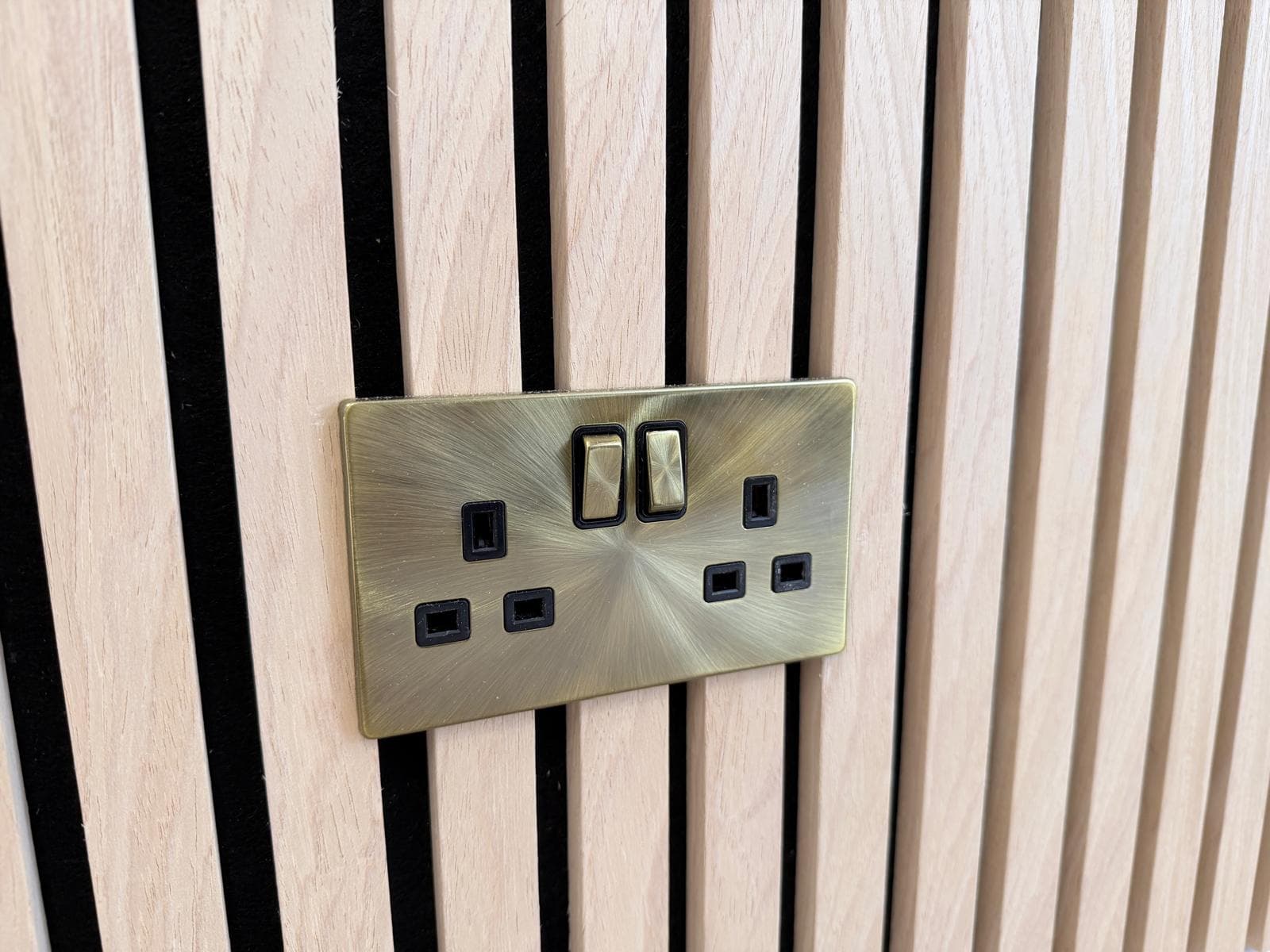
USB sockets and switched outlets can improve usability, but the accessory still has to be compatible with the circuit and installed correctly. A fused connection unit (a switch with a built-in fuse) may be more appropriate for certain fixed appliances. The visible socket faceplate is only the final part of the decision. The circuit design behind it determines whether the installation is suitable.
What to check before arranging the work
You can gather useful information without removing a socket or opening the consumer unit. Note the proposed position, what the socket will supply and whether other sockets or lights lose power when a particular protective device is switched off. Photographing the consumer unit and the room can also help us understand the starting point before visiting.
Do not remove covers, test live parts or attempt to trace cables yourself. The consumer unit contains exposed electrical hazards even when some circuits appear to be switched off. Inspection, testing and any changes to fixed wiring should be carried out by a suitably competent electrician.
The sensible decision is based on evidence
A new consumer unit should not be recommended simply because you want another socket, and it should not be ruled out without checking the installation. The property age, construction, circuit arrangement, protective devices, previous alterations and intended use all contribute to the answer.
We carry out the necessary checks, explain what they mean and separate essential safety work from optional improvements. We serve homeowners across Southville, Bedminster, Ashton, Windmill Hill and wider South Bristol, with work carried out to BS7671 and Building Regulations. If you are planning additional sockets, contact us with the location and intended use so we can advise on the appropriate next step.
Other Articles